
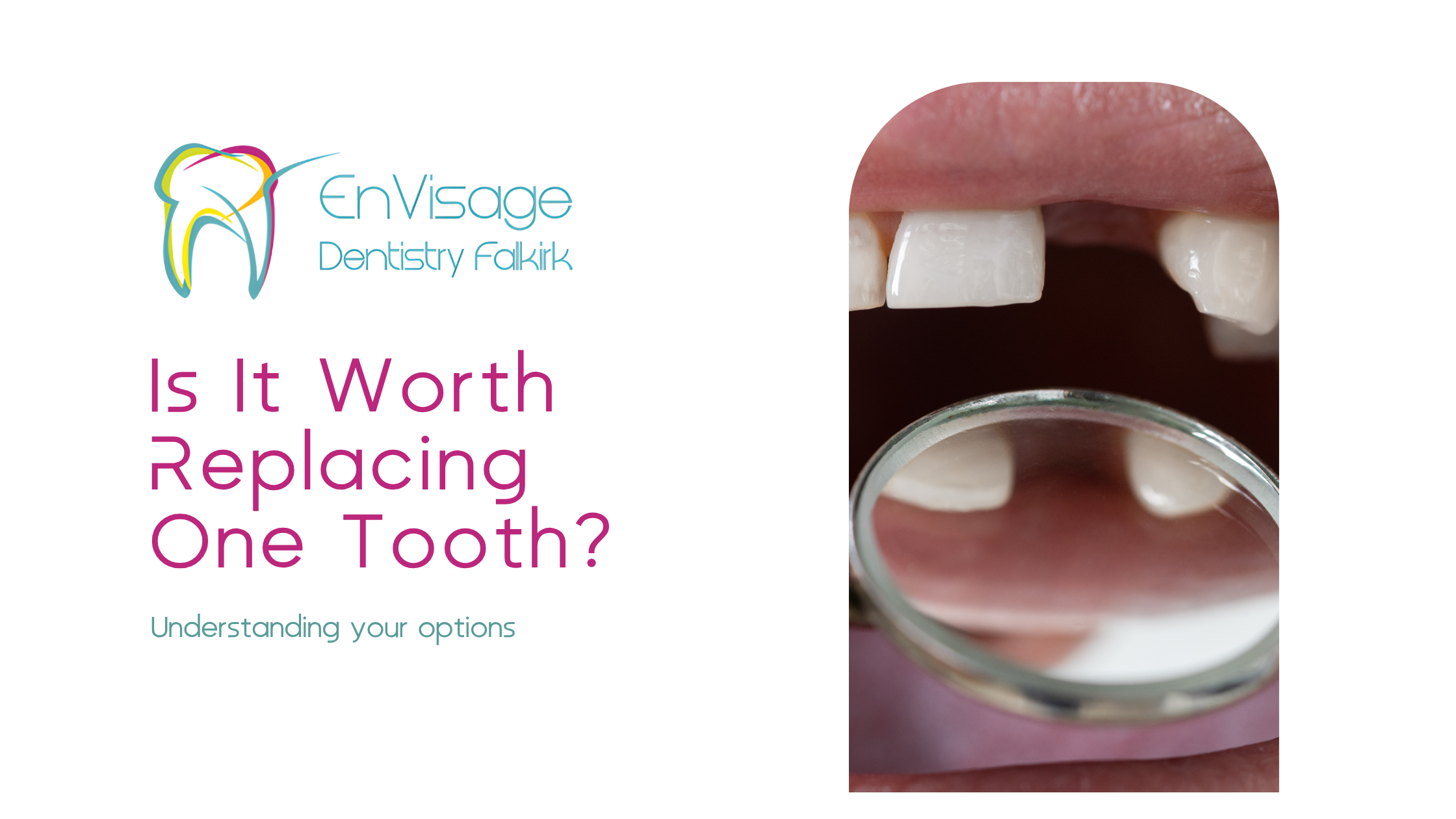
Losing a single tooth can feel like a small issue at first, especially if it isn’t visible when you smile or don’t affect your day-to-day routine. Many patients in Falkirk continue comfortably for some time without replacing it, particularly if there’s no pain or immediate inconvenience.
At the same time, it’s common for questions to come up later. You might start to wonder whether leaving the gap could affect other teeth, or whether replacing it would make a difference in the long term. For many people, the question isn’t just about treatment it’s about whether it’s worth considering at all.
Understanding what a dental implant involves, and when it may or may not be appropriate, can help you make a decision that feels balanced and informed.
What Happens When a Tooth Is Missing
When a tooth is lost, the surrounding area doesn’t always stay the same. Even if everything feels stable, small changes can occur gradually over time.
The neighbouring teeth may shift slightly into the space, and the opposing tooth can begin to move as well. The bone in the area where the tooth was can also change due to lack of stimulation.
These changes are often slow and may not be noticeable straight away, which is why many people feel unsure whether action is needed.
What Is a Dental Implant?
A dental implant is a way of replacing a missing tooth by placing a small support into the jawbone, which then holds a replacement tooth on top.
The aim is to restore function and appearance in a way that feels secure and natural. Unlike some other options, an implant does not rely on neighbouring teeth for support.
Treatment is carried out over time, allowing the area to heal properly before the final restoration is placed.
Why Do People Consider an Implant for One Tooth?
For some patients, the decision is practical. They may want to restore chewing ability or prevent other teeth from moving. For others, it’s more about feeling comfortable with their smile or avoiding a visible gap.
People often consider implants because they:
- Replace the missing tooth without affecting nearby teeth
- Provide a fixed, stable solution
- Support long-term oral structure
However, not everyone with a missing tooth feels the need to replace it, and that’s a valid choice too.
Does This Always Need Treatment?
No. A single missing tooth does not always need to be replaced, particularly if it is not affecting function, comfort, or oral health.
Some people choose to leave a gap and simply monitor the area during routine dental visits. This approach can be appropriate when the surrounding teeth are stable and there are no signs of movement or other concerns.
The decision to replace a tooth is personal and should be based on understanding the options rather than feeling pressure to act.
When Might an Implant Be Worth Considering?
An implant may be discussed if the missing tooth is starting to affect your bite, your ability to chew comfortably, or the position of surrounding teeth.
It may also be considered if the gap is noticeable and you would prefer a more complete smile.
Rather than being a fixed recommendation, it is usually presented as one of several possible options, allowing you to weigh up what feels right for you.
What Are the Alternatives?
An implant is not the only way to replace a missing tooth. Depending on the situation, other options may be discussed.
These can include:
- Leaving the space and monitoring it
- A bridge supported by neighbouring teeth
- A removable option, if appropriate
Each approach has its own considerations, and suitability depends on individual circumstances.
What to Expect from the Process
Dental implant treatment is usually carried out in stages. After an initial assessment, the implant is placed and given time to settle before the final tooth is fitted.
The process is carefully planned and can take several months from start to finish. This allows the area to heal properly and helps ensure a stable result.
Patients are supported throughout, with clear explanations at each stage so they understand what is happening and why.
Thinking Long Term
When deciding whether an implant is worth it, it can help to think about the longer term rather than just the immediate situation.
Some people prefer to address the gap early to maintain stability and avoid changes over time. Others are comfortable monitoring the area and planning later if needed.
There isn’t a single right answer the focus is on what feels appropriate for your situation and preferences.
If You’d Like to Talk It Through in Falkirk
If you’re unsure whether replacing a missing tooth is necessary, or whether a dental implant is something worth considering, it can help to talk it through.
The team at Envisage Dentistry Falkirk can assess your situation, explain the options clearly, and help you decide whether monitoring or treatment would be suitable.
📞 01324 624630
📧 [email protected]
FAQs
Is it okay to leave one missing tooth untreated?
In some cases, yes. If it’s not affecting function or surrounding teeth, monitoring may be appropriate.
Do dental implants feel like natural teeth?
They are designed to feel stable and function similarly, although experiences can vary.
How long does implant treatment take?
It usually takes several months, as time is needed for healing between stages.
Is an implant the only option for replacing a tooth?
No. Other options may be suitable depending on your situation.